

About BlazingCDN
Founded in 2021 by a team with 15 years in content delivery. We build and operate our own global Anycast network for high-volume static traffic: video, software, large files and media. The edge software, the platform and the control panel are our own work.
Engineer reply within 3 business hours · Configuration done with you, not sold separately
What we actually do
CDN development
Platform development
Data centre operations
Client solutions
Numbers we are willing to be held to
Delivery
- 96%+ average cache hit ratio
- 27 ms in Europe and 24 ms in North America, measured June 2026
- Up to 50 GB per file
- Unlimited requests on every plan
Network
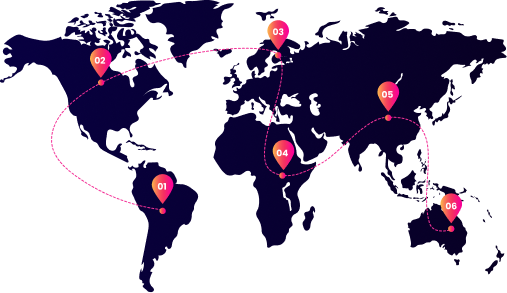
- Edges in the US, Europe and Asia
- NVMe SSD-based servers everywhere
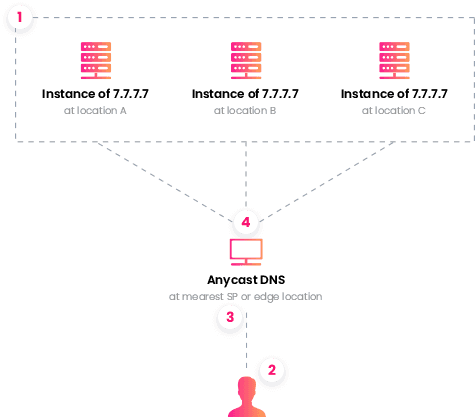
- Anycast, one global IP per zone
- Edge software written in-house
Company
- Founded in 2021
- Team with 15 years in content delivery
- Network and platform built in-house
- Engineer reply within 3 business hours
What we deliver

Anycast CDN

Video CDN

HLS Streaming CDN
Files on Demand
Built in-house, not resold
- CDN Development
- Platform Development
- Data centers Ops
- Client Solutions
BlazingCDN was founded in 2021 by engineers who had already spent 15 years building content delivery. The network, the platform and the control panel are our own work, which is why a configuration request goes to the people who wrote the code rather than into a vendor queue.
For enterprise clients we configure what genuinely exists to configure: dedicated IP addresses, edge servers, and custom rules and cache configurations built around your traffic.
How the network is put together
Network carriers we run on
- North America
- NTT
- AT&T
- Lumen (Level 3)
- Cogent
- Comcast
- Europe
- NTT
- Deutsche Telekom
- Orange
- Lumen (Level 3)
- Liberty Global
- Sparkle
- Cogent
- Telefonica
- Telia
- Zayo
- Asia-Pacific
- NTT
- Lumen (Level 3)
- KINX
- PLDT
- Singtel
- SK Broadband
- Tata Communications
- Telstra
- South America
- NTT
- Lumen (Level 3)
- Lanautilus
- Telefonica
Questions buyers ask about BlazingCDN, the company
BlazingCDN is a pay-as-you-go CDN founded in 2021 by engineers with 15 years in content delivery. The company builds and runs its own Anycast network, edge software and control panel for video, software downloads and large files. Pricing runs from $5 per TB down to $2.50 per TB, and an engineer replies within 3 business hours.
What does BlazingCDN do, and who uses it?
BlazingCDN is a content delivery network for high-volume static traffic, priced from $5 per TB down to $2.50 per TB (as of October 2026). The network carries video on demand, live HLS and DASH streams, software installers and updates, game patches, images and files up to 50 GB.
BlazingCDN sells delivery in four main products: Anycast CDN, Video CDN, HLS Streaming CDN and Files on Demand CDN. Cloud Storage and Image Processing sit next to them. Typical buyers are software companies, OTT and media platforms, game studios and SaaS teams whose monthly bill is driven by terabytes, not by requests. For example, a team delivering 100 TB a month pays $415 in total, with no request fees and no setup fee. BlazingCDN is a delivery layer only. The company does not offer transcoding, edge compute, WebSockets or HTTP/3.
How much does BlazingCDN charge for 200 TB a month?
BlazingCDN charges $765 for 200 TB a month on its published progressive tiers (as of October 2026). Each band of traffic has its own rate, like tax brackets: the first 5 TB cost $5 per TB, 5 to 25 TB cost $4.50, 25 to 100 TB cost $4.00, and 100 to 500 TB cost $3.50.
The same rate applies in the US, Europe and Asia. BlazingCDN adds no request fees, no regional multipliers and no setup fee. The monthly minimum is $25. There is no long-term contract: pay as you go or monthly. Enterprise terms start from 100 TB a month, and a quote never raises the published price. For example, the first 100 TB cost $415 in total. The second 100 TB bill at $3.50 per TB. Above 1,500 TB a month, pricing starts from $2.50 per TB and is quoted individually.
Does BlazingCDN run its own network or resell another CDN?
BlazingCDN runs its own network: the edge software, the platform and the control panel were written in-house by a team with 15 years in content delivery. The company was founded in 2021 and handles CDN development, platform development and data centre operations itself.
Building in-house changes how support works. A configuration request goes to the engineers who wrote the code, not into a reseller’s vendor queue. The servers run on NVMe SSD storage, and Anycast routing gives each zone one global IP with built-in failover. Upstream transit comes from carriers such as NTT, Lumen, Cogent, Deutsche Telekom, Telia, Singtel and Tata Communications. For enterprise clients, BlazingCDN configures dedicated IP addresses, edge servers, and custom rules and cache settings built around the client’s traffic. The average cache hit ratio is 96%+, so an origin serves each file roughly once per TTL per region.
Is BlazingCDN a good fit for a small website?
BlazingCDN fits a small website only when the site moves heavy static files, because the bill starts at a $25 monthly minimum that covers the first 5 TB (as of October 2026). A blog or brochure site serving a few hundred GB will pay that minimum without using the capacity.
BlazingCDN is built for volume: video, downloads, game patches, images and archives up to 50 GB per file. The rate falls from $5 per TB to $2.50 per TB as monthly traffic grows. For example, 20 TB a month costs $92.50, and 1,000 TB costs $3,315. Several features are not offered at all: HTTP/3, edge compute, WebSockets and video transcoding. A project that needs code running at the edge, or real-time sockets, should keep another provider for that part. Static traffic from the same project can still move to BlazingCDN as a second CDN.
How does BlazingCDN onboard a new client?
BlazingCDN onboards a new client in about one hour with an engineer, followed by a 14-day testing period on real production traffic. Configuration is done together with the client and is not sold as a separate service.
The usual order is simple. A KYC check comes first, before any production traffic flows. Next, an engineer helps create a zone that points at the client’s origin, sets cache rules and attaches the client’s hostname and certificate. Traffic can then start small. BlazingCDN can run as a second CDN behind DNS with a weighted split, so for example 10% of requests go to BlazingCDN while the current provider keeps the rest. After onboarding, the 24/7 helpdesk stays open and an engineer replies within 3 business hours. Purge, signed URLs, real-time statistics, Prometheus metrics and the REST API are included from day one.