

CDN for TV and Online Broadcasters
Linear channels, simulcast and catch-up, delivered from the edge with an LL-HLS path in the 2-4 second range where standard HLS leaves viewers 20-40 seconds behind the action.
From $5/TB down to $2.50/TB, so 100 TB is about $415 a month · 14-day testing period on real traffic · $25 monthly minimum waived · Engineer reply within 3 business hours





What 100 TB of broadcast traffic costs
First 5 TB
- $25 for the whole tier
- This is also the monthly minimum
5 to 25 TB
- $90 for the next 20 TB
- 25 TB in total: about $115
25 to 100 TB
- $300 for the next 75 TB
- 100 TB in total: about $415
Broadcast quality, delivered as HLS
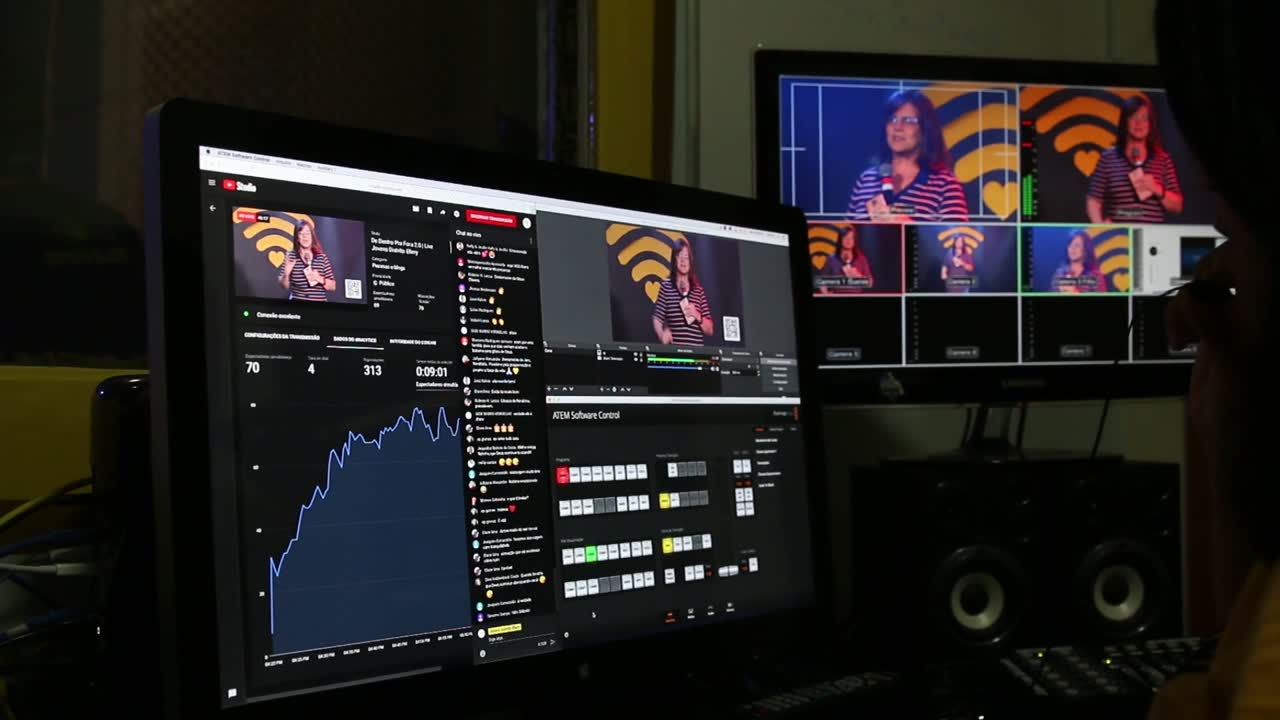
 Served from
Your ladder, our edge
Cached once per region
Try it in your own player
https://cdn84906683.blazingcdn.net/broadcast-studio/hls/master.m3u8 · Segments: 4 s · Footage: Pexels, free licence Four things a broadcast schedule does to a CDN
24/7 linear channels
Simulcast across regions
Catch-up and archive
Breaking news and peak events
How chunks reach the viewer

What the stream runs on
Formats we deliver
- HLS and M3U8 playlists
- LL-HLS with partial segments
- DASH, adaptive bitrate
- HDS, where your estate still needs it
- MSS, Microsoft Smooth Streaming
Protecting the stream
- Signed URLs with an expiry
- Hotlink protection
- IP whitelisting and geofencing
- DRM-encrypted segments, keys stay yours
- HTTPS enforced on every zone
Players and devices
- Web players with LL-HLS support
- iOS and Android
- Apple TV, Roku, Android TV
- Your own hostname and SSL certificate
- CORS configured per zone
Network Carriers
- North America
- NTT
- AT&T
- Lumen (Level 3)
- Cogent
- Comcast
- Europe
- NTT
- Deutsche Telekom
- Orange
- Lumen (Level 3)
- Liberty Global
- Sparkle
- Cogent
- Telefonica
- Telia
- Zayo
- Asia-Pacific
- NTT
- Lumen (Level 3)
- KINX
- PLDT
- Singtel
- SK Broadband
- Tata Communications
- Telstra
- South America
- NTT
- Lumen (Level 3)
- Lanautilus
- Telefonica
Simple setup: just bring your media server
To get started, all you need is your own media server or packager. We are a delivery layer, not a processing layer: we do not transcode, re-package or generate manifests, and that is exactly why nothing we do can break your playout chain.
- Supported media servers: Wowza Streaming Engine, NGINX RTMP, FFmpeg and others that produce HLS or DASH output.
- Flexible configuration: point the zone at your packager’s output and put the CDN hostname in your player config. Test on a temporary hostname before switching DNS.

					{
  "pull_zone": {
    "name": "string",
    "source": "origin",
    "origin": "string",
    "origin_ssl": true,
    "origin_url": "string",
    "bucket_id": "8f7ac8aa-ed2b-4e16-81e0-0766bdb092b8",
    "folder_name": "string",
    "cache_gzipped": true,
    "domain": "string"
  }
}
Full API Support
BlazingCDN’s Streaming CDN includes an extensive API that gives you full control over your CDN configuration, allowing for automation, monitoring, and customization of your streaming delivery.
Four write-ups from the video side
OTT provider, multi-region
Live sports streaming
Short-video platform
E-learning platform
Move without a risky migration
Run a 14-day testing period
Keep your current CDN running
Start with one region or one channel
An engineer, not a ticket queue
Test CDN Speed Across Top Regions
Avg. Download Speed
Latency
Test link
Which product carries your channel

Anycast CDN

Video CDN

HLS Streaming CDN
Files on Demand
Questions buyers ask about CDN delivery for TV broadcasters
BlazingCDN delivers linear channels, simulcast and catch-up as HLS, LL-HLS and DASH from the edge, with an LL-HLS path in the 2 to 4 second range. Broadcasters keep their own media server or packager. Delivery costs from $5 down to $2.50 per TB, so 100 TB of broadcast traffic is $415 a month (as of October 2026).
What does 500 TB of broadcast traffic cost per month?
On BlazingCDN, 500 TB of monthly broadcast traffic costs $1,815 (as of October 2026). The tiers are progressive: $5 per TB for the first 5 TB, $4.50 up to 25 TB, $4.00 up to 100 TB, then $3.50 up to 500 TB. One rate applies to viewers in the US, Europe and Asia.
For example, a channel averaging 300 concurrent viewers at 5 Mb/s delivers about 486 TB in a 30-day month. Broadcasters should size from real concurrency and bitrate, not from subscriber counts. No request fees apply, which matters because HLS players request a new segment every few seconds. Enterprise terms start from 100 TB a month, and a quote never raises the published price. Above 1,500 TB, pricing starts from $2.50 per TB and is quoted individually. The $25 monthly minimum only affects very small test channels.
How do live HLS chunks reach viewers through BlazingCDN?
BlazingCDN carries live HLS by caching each playlist and segment once per region and serving every other viewer from the edge. The broadcaster’s packager, such as Wowza Streaming Engine, NGINX RTMP or FFmpeg, writes the manifest and segments. The zone points at that output.
A player requests the playlist, then fetches new segments every few seconds. The first viewer in a region triggers one origin fetch for each new segment, and the edge answers everyone after that. An origin shield collapses those regional fetches further, so the packager sees a small, steady load during peaks. For example, a breaking news spike still produces about one fetch per segment per region, however many viewers join. BlazingCDN delivers HLS, LL-HLS with partial segments, DASH, HDS and Microsoft Smooth Streaming. BlazingCDN does not transcode, re-package or generate manifests, so the playout chain stays under the broadcaster’s control.
Is BlazingCDN a good fit for low-latency live channels?
BlazingCDN supports an LL-HLS path in the 2 to 4 second range, against the 20 to 40 seconds that standard HLS often leaves viewers behind live. Latency depends heavily on the packager: partial segments and short segment durations set the floor, and the CDN has to pass them through quickly.
BlazingCDN caches partial segments at the edge and serves them over HTTP/2 and TLS 1.3. Measured June 2026 on a 100 MB HTTPS download, response time was 27 ms in Europe, 24 ms in North America and 47 ms in Asia. For example, standard HLS with three 6-second segments buffered already sits about 18 seconds behind live. Web players need LL-HLS support to use the low-latency path. BlazingCDN does not offer HTTP/3 or WebSockets, so latency designs built on those protocols do not apply. Standard HLS and DASH remain available for devices without LL-HLS support.
Can a broadcaster test BlazingCDN on one channel first?
Yes, BlazingCDN lets a broadcaster start with one channel or one region and run a 14-day testing period on real production traffic. The current CDN keeps running in parallel. BlazingCDN can sit behind DNS as a second CDN with a weighted traffic split.
Setup takes about one hour with an engineer. The zone points at the packager output, and the player config gets the CDN hostname. Testing runs on a temporary hostname before any DNS change. For example, a broadcaster might route 10% of one simulcast channel through BlazingCDN, compare buffering and cost, then raise the share. A KYC check comes before production traffic. A custom hostname with your own SSL certificate and CORS per zone are supported, so web, iOS, Android, Apple TV, Roku and Android TV players keep working. An engineer replies within 3 business hours, backed by a 24/7 helpdesk.
How can broadcasters geofence streams and protect segments?
BlazingCDN protects broadcast streams with signed URLs that expire, geofencing by country, IP whitelisting and hotlink protection, configured per zone. Rights-limited channels can be blocked outside licensed territories at the edge. HTTPS is enforced on every zone.
Signed URLs carry an expiry, so a shared playlist link stops working after its window closes. Hotlink protection stops other sites from embedding the stream. BlazingCDN also delivers DRM-encrypted segments, while the encryption keys stay with the broadcaster. Catch-up and archive content can use longer link lifetimes than live channels. For example, a catch-up episode link might expire after 24 hours, while live playlist links rotate every few minutes. Access control is the scope here, because BlazingCDN does not sell a security suite. Real-time statistics, Prometheus metrics and the REST API show traffic per zone, and raw logs cost $50 a month (as of October 2026).